

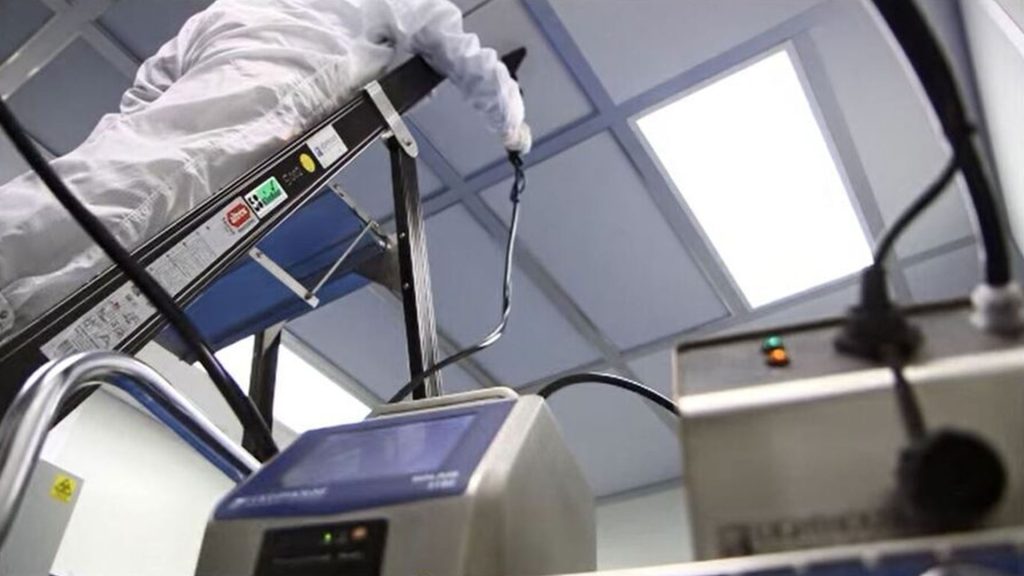
A HEPA filter may leave the factory fully compliant with performance standards, but damage during transport, installation, or operation can compromise the entire cleanroom system. This is why installed filter integrity testing has become one of the most important verification activities in contamination-controlled environments.
As regulatory expectations continue to increase across pharmaceutical and high-technology industries, understanding the difference between factory efficiency testing and onsite integrity testing is essential for maintaining compliance, product quality, and operational reliability.
How HEPA Filtration Really Works
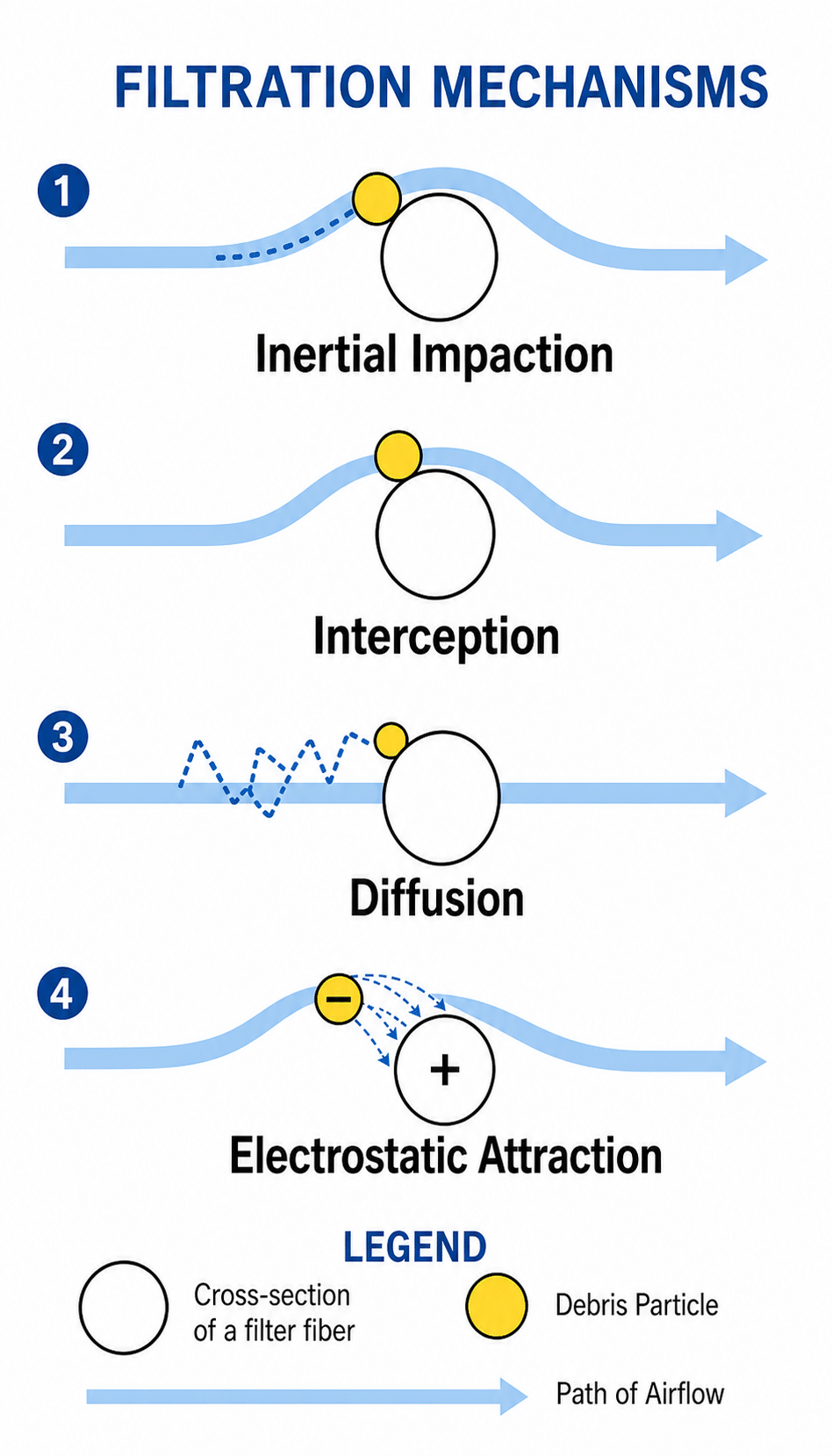
HEPA and ULPA filters do far more than simply “block” particles larger than openings in the filter media. High-efficiency filtration relies on several simultaneous capture mechanisms, each affecting different particle sizes.
Large particles are commonly captured through inertial impaction and sieving effects. Because of their momentum, these particles cannot follow changing airflow paths around filter fibers and instead collide directly with the media. Intermediate particles are often removed through interception, where they follow airflow streamlines but pass close enough to fibers to adhere.
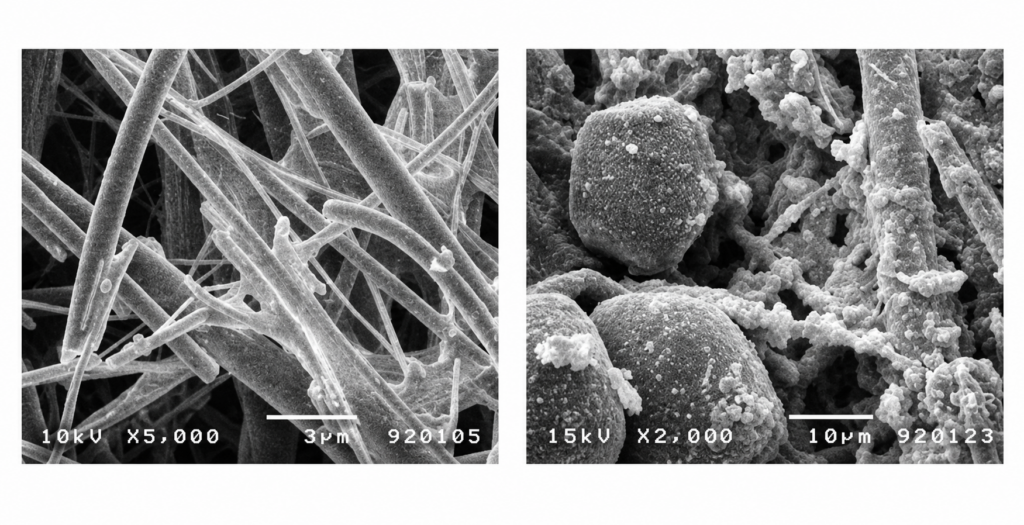
For very small particles, diffusion becomes dominant. These microscopic particles move randomly due to Brownian motion, increasing the likelihood of contact with filter fibers. Electrostatic attraction may also contribute to particle capture in some filter designs.
Interestingly, the most difficult particles to capture are not the smallest. Filter efficiency reaches its lowest point at the Most Penetrating Particle Size (MPPS), typically near 0.1–0.3 µm depending on airflow conditions and filter construction. This particle size becomes the basis for factory filter classification and testing.
Standards Governing HEPA Filter Testing
Several international standards define how HEPA and ULPA filters are tested and classified.
EN1822 remains one of the primary European standards for factory performance testing of EPA, HEPA, and ULPA filters. ISO 29463 later expanded these concepts into a more globally harmonized framework while maintaining MPPS-based testing methodologies.
Other standards such as ISO 16890 and ASHRAE 52.2 focus more heavily on general ventilation systems and particulate matter efficiency classifications for HVAC applications.
For cleanroom operators, however, ISO 14644-3 and IEST Recommended Practices are particularly significant because they address installed filter integrity testing rather than simply laboratory efficiency performance.
This distinction is critical.
Factory efficiency testing evaluates whether the filter media itself meets specified retention efficiencies under controlled laboratory conditions. Installed integrity testing, by contrast, verifies that the entire installed system is free from leaks, bypass paths, damaged seals, frame defects, or mechanical installation failures.
A filter can achieve excellent factory efficiency ratings yet still allow contamination into a cleanroom through gasket leakage, pinhole damage, or improper installation. In practice, many cleanroom contamination issues originate not from poor filter media performance, but from physical defects introduced after manufacturing.
Why Installed Integrity Testing Is Essential
In pharmaceutical Grade A and Grade B cleanrooms, even a small filter leak can create a direct contamination pathway into critical processing areas. The consequences may include batch rejection, sterility failures, regulatory observations, or product recalls.
Installed filter integrity testing is therefore designed to confirm that the final filtration barrier remains fully functional after installation.
According to ISO 14644-3, the process involves introducing an aerosol challenge upstream of the filter and scanning downstream surfaces to detect leakage points. The standard recognizes two primary testing approaches: aerosol photometer methods and particle counter methods.
Historically, aerosol photometers have been the dominant technology used in cleanroom certification. These systems measure aerosol mass concentration downstream relative to upstream challenge concentration using substances such as PAO, DEHS, DOS, or DOP.
Photometer testing remains highly effective, particularly for large air handling systems. However, it typically requires significantly higher aerosol concentrations than particle counter-based methods.
This creates several operational concerns. Oil-based aerosols may contaminate ductwork or sensitive manufacturing environments, and repeated exposure may potentially affect certain filter seal materials. In highly sensitive manufacturing processes, minimizing contamination introduced during testing itself has become increasingly important.
The Rise of Particle Counter-Based Testing
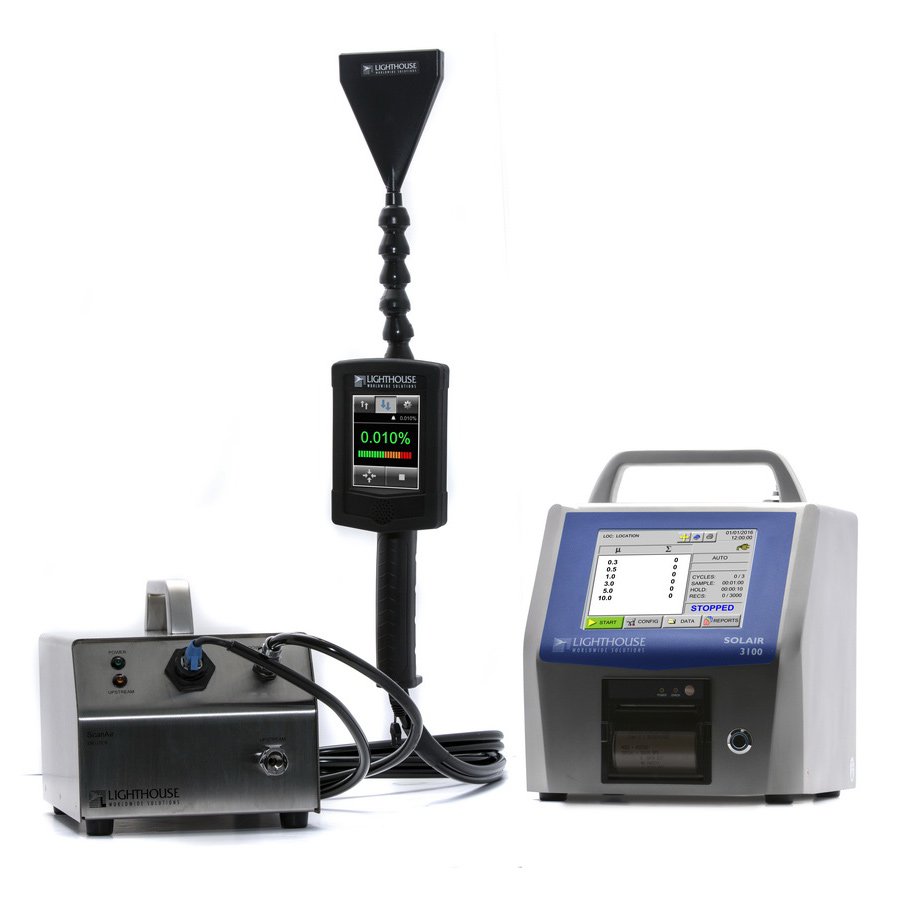
Modern Light Scattering Airborne Particle Counter (LSAPC) methods are gaining popularity because they offer more precise measurement with substantially lower aerosol loading requirements.
Instead of measuring relative aerosol mass concentration, particle counters directly quantify actual particle concentrations upstream and downstream of the filter. This provides highly sensitive leak detection while reducing the amount of challenge aerosol introduced into the system.
Particle counter methods also reduce fire risk due to smaller aerosol generator requirements and allow the use of alternative aerosol materials when oil-based substances are undesirable.
Another major advancement is the integration of intelligent automation into modern integrity testing systems. Advanced particle counter platforms can automatically verify upstream aerosol consistency, evaluate concentration homogeneity, and perform dilution calculations internally.
These capabilities improve testing repeatability, reduce operator error, and strengthen confidence in test data integrity — an increasingly important consideration in regulated industries focused on digital quality systems and data integrity compliance.
A Critical Component of Modern Contamination Control
As contamination control strategies evolve, HEPA filter integrity testing is no longer viewed as a routine certification activity. It has become a critical engineering verification process directly linked to product protection and regulatory compliance.
Modern cleanrooms depend on far more than room classification alone. True contamination control requires continuous verification that critical engineering controls remain intact and fully operational throughout the lifecycle of the facility.
A properly executed HEPA integrity test confirms the effectiveness of the final airborne contamination barrier protecting products, processes, and ultimately patients.
In today’s increasingly demanding manufacturing environments, the ability to verify filter integrity with precision, consistency, and confidence is more important than ever.